

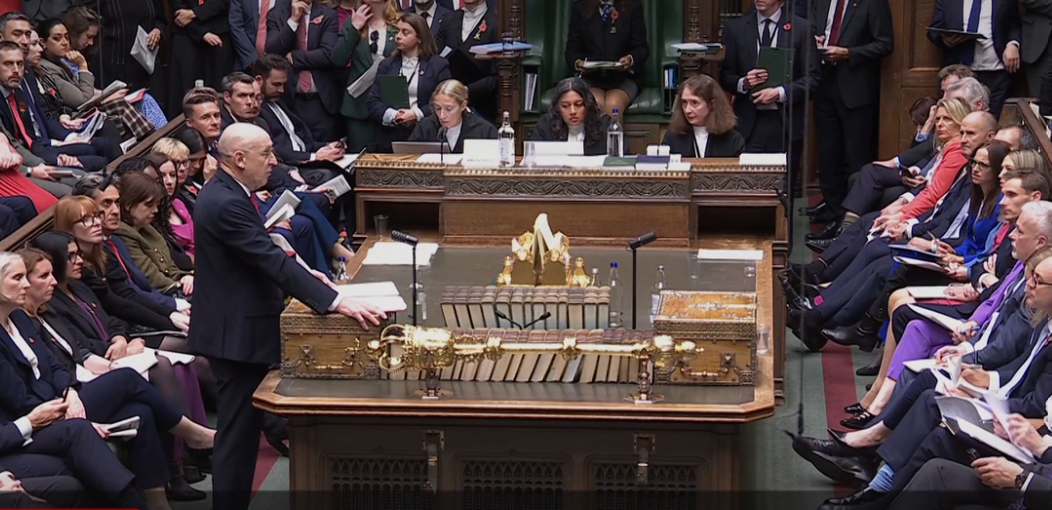
John Healey has set out the government’s tax and spending plans in his first Budget today, and among the ‘highlights’ were:
Temporary contribution from banks: The Bank Corporation Tax Surcharge will increase from 3% to 6% for 15 months, raising £1.5 billion to help fund support for households and businesses, before ending on 31 March 2028.
MTD: Taxpayers joining Making Tax Digital for Income Tax from April 2027 will benefit from a temporary easement from late submission penalties during the first year in the regime. It means that for the first 12 months, these taxpayers will not receive penalty points for making late quarterly updates.
Modernising company distributions framework: Rules governing company distributions will be modernised to prevent complex arrangements being used to extract profits at lower tax rates, while protecting genuine commercial transactions and family and families passing down their business. Business Asset Disposal Relief has been reduced from £1m to £500,000.

Levelling the playing field online: From October 2027, online marketplaces will take responsibility for collecting VAT on qualifying sales by UK businesses using their platforms, tackling evasion that undercuts honest firms on the high street and online.
Fairer treatment of private hire operators: Responding to inconsistencies in tax treatment that have emerged as the private hire vehicle market has grown, larger operators will be required to account for VAT consistently on the full passenger fare, while smaller and local taxi and minicab firms are protected.
Savings and property income: From April 2027, tax rates on savings and property income will rise by a further two percentage points across all bands. The government will also work with industry to explore creating a new ISA incentive for people investing in a stocks and shares ISA for the first time. The detailed design will be developed with industry.
Backing entrepreneurs and scaling businesses: The government is introducing a new Founders Relief, to encourage founders to scale their companies in the UK, and when the time comes, reinvest in the next British success story. It will offer eligible founders will be of high-growth, innovative companies a reduced 10% rate of Capital Gains Tax on up to £10 million of lifetime gains. It is also tripling the trading allowance from £1,000 to £3,000 to support people starting a business; improving venture capital schemes and simplifying access to R&D tax reliefs to help growing firms attract investment and innovate; and we are expanding tax-advantaged employee share schemes to help ambitious businesses recruit and retain talent.
Greater fiscal powers: All Mayors will receive income tax assignment from 2028, while legislation will give all Strategic Authorities the power to introduce an Overnight Visitor Levy. The government intends for local and regional government to retain 100% of business rates income before the end of the decade, with mayors receiving a share of business rates from 2027, replacing grants from central government and giving places greater control over the resources they raise.
Delivering the government’s commitments on business rates: All retail, hospitality and leisure properties in England will see their business rates either frozen in real terms, reduced, or cut to zero. On top of the extra 20% business rates cut for pubs and all but the largest live music venues, announced in July, this package will take around 70,000 more retail, hospitality and leisure businesses out of business rates by increasing the Small Business Rates Relief threshold# from £12,000 to £18,000 (with the upper threshold for tapered relief increasing from £15,00 to £21,000). As a result, half of all retail, hospitality and leisure properties will pay no business rates. The Chancellor has also announced a two-year real-terms freeze in business rates bills for all retail, hospitality and leisure properties.
Targeting support on thriving high streets: As part of efforts to clean up and strengthen our high streets, vape shops and adult gaming centres will also no longer benefit from certain business rates reliefs.
Higher wages: On 1 April 2027, the National Living Wage will increase by 3.9% to £13.21 per hour. This uplift represents an increase of £910 to gross annual earnings of a full-time worker on the National Living Wage.
Paternity: The government is extending parental pay to more than 160,000 additional parents, including self-employed dads and partners who have previously missed out.
