

Understand the ‘why’ behind double-entry bookkeeping and you will build a solid foundation for learning, says Sarah Wilson.
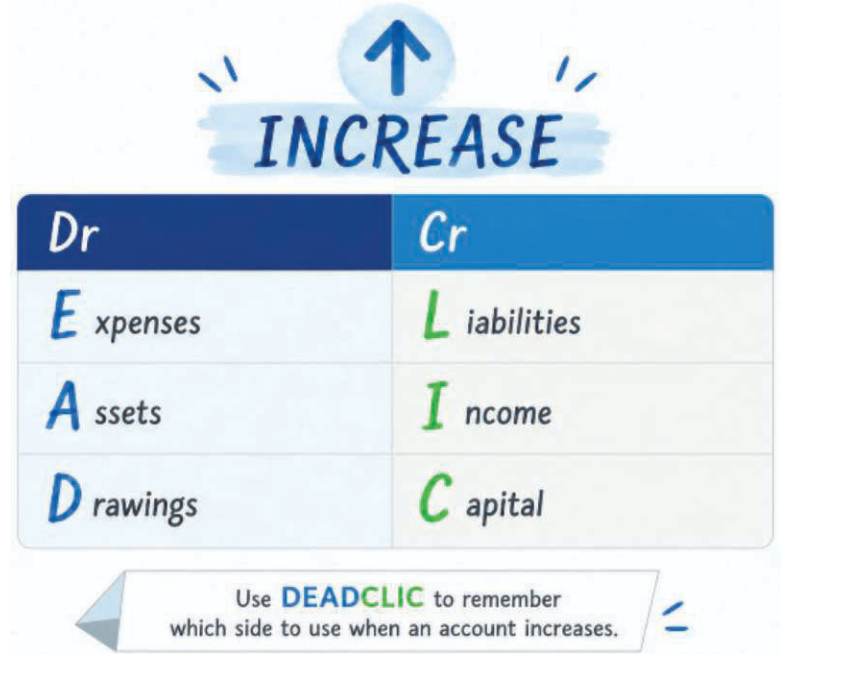
Double-entry bookkeeping is the heartbeat of accounting. Early in your AAT studies you are likely introduced to ‘DEAD CLIC’ – a handy mnemonic to help you remember which accounts are debits and which are credits. While mnemonics are great for getting started, relying on them as a shortcut without understanding the underlying logic can lead to errors as you progress to more complex levels.
Beware shortcuts
The danger of DEAD CLIC is that it treats accounting like a memory test rather than a logical system. For example, if a student simply memorizes that ‘assets are debits’ they might struggle when they encounter a credit entry in an asset account, such as a disposal or a bank overdrawn position.
Similarly, when dealing with ‘sales returns’ or ‘purchase returns’ students often get stuck. If sales is a Credit (income), where does a return go? If you only know the acronym you might hesitate. If you understand the nature of the transaction – that it is reversing a previous entry – the answer becomes logical rather than a guess.
The accounting equation
To move beyond the shortcut, we must return to the fundamental accounting equation: Assets = Capital + Liabilities.
This equation must always balance, and double-entry is simply the mechanism that keeps it in check.
- The Left Side (Debits): Represents what the business has or where the money has gone.
- The Right Side (Credits): Represents where the money came from (the sources of finance).
When you look at DEAD CLIC through this lens the ‘why’ becomes clear: - Debit: Expenses, Assets, Drawings (what the business has spent or currently holds).
- Credit: Liabilities, Income, Capital (how those assets and expenses were funded).
The dual effect
Instead of just reciting the letters, ask yourself: does this transaction increase what the business owns/has used, or does it increase how the business is funded?

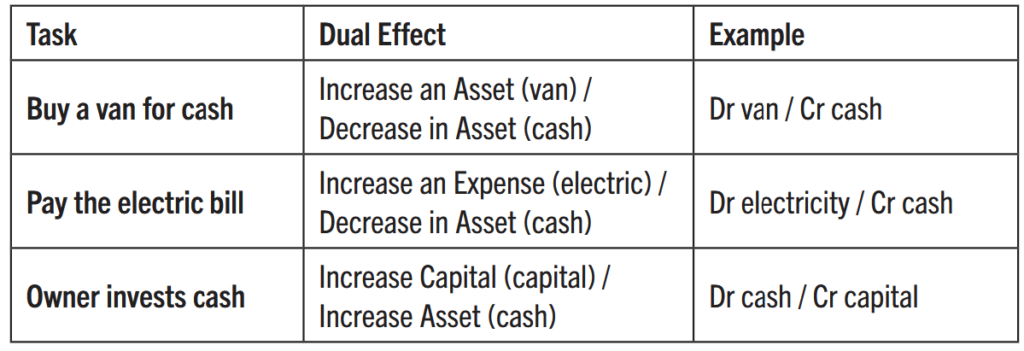
This approach works regardless of the complexity of the transaction: it is flexible, reliable, and will always work.
When things get tricky
Consider a sales return. Sales is income (Credit). A return is effectively ‘negative income’ – it reduces the amount of income the business has earned. To reduce a credit balance, you must do the opposite. Therefore, a sales return is a Debit. You don’t need a new acronym; you just need to understand the relationship between the accounts.
Now have a go
Identify whether the following transactions result in a Debit or a Credit for the bold account:
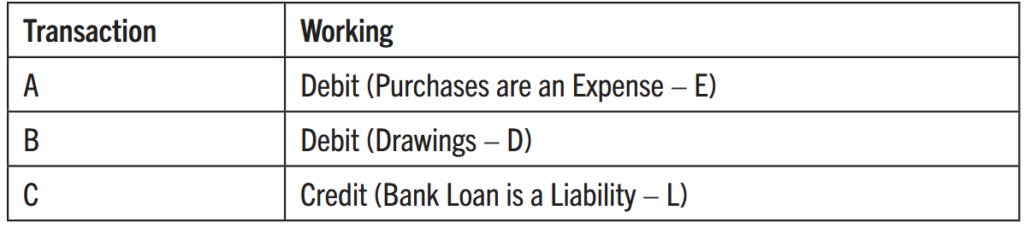
A: Purchases of goods for resale on credit.
B: Owner draws cash from the business for personal use.
C: Taking out a bank loan.
Answers
Final thought
Mnemonics like DEAD CLIC are brilliant ‘training wheels’, but to be a successful accountant at Level 4 and beyond you need to be able to ride without them. Anchoring your knowledge in the fundamental accounting equation provides a mental framework that is flexible, reliable and will always work – no matter how unusual a transaction may appear.
This is especially critical when sitting your AAT exams. Under exam pressure, it is easy to misremember a short cut or panic when a question is structured in a way that feels slightly unfamiliar. However, if you have a ‘clear starting point’ based on logic rather than a memorized acronym you can approach any task with confidence. Remember, examiners are specifically looking for you to focus on the logic of the transaction.
By mastering these basics now, you ensure you aren’t just rewarding your memory, but are instead building the professional judgment required for a successful career in accountancy.
- Sarah Wilson is a learning content creator and AAT tutor at Accountancy Learning
